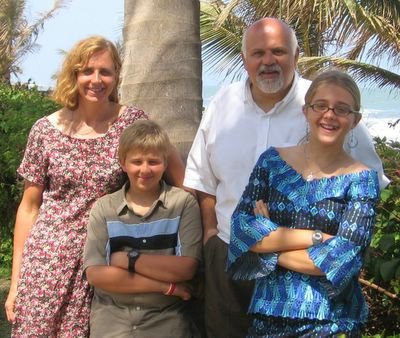
Sometimes I don’t think Liberians have any idea how strong they are. For over twenty five years, they have watched their homeland fall apart around them. Almost every Liberian over ten years old has lived through and remembers displacement, fear, violent and terrible things happening, horror, disruption, poverty, sickness, and hopelessness. Liberians are used to adapting, surviving, and making the most out of a bad situation. Yet so many—like the 25 in this workshop I’m leading--are actively working to build communities of compassion and justice.
The workshop participants are men and women of various ages from a variety of organizations. They want to improve their social work and counseling skills. Every work day for eight weeks they have been meeting in a classroom from 8:00am to 3:30pm. After the eight weeks, they will work on site with humanitarian organizations putting their learning into practice. The workshop I am leading is a two week section called “basic counseling skills." It’s the equivalent of a semester long upper level undergraduate course crammed into sixty hours over ten days. I’m having a great time with these truly world class heroes. There is much we are learning together—they about Western people-helping, me about West African people-helping. There is much laughter seasoned with a bit of hard brain work and a lot of practical activities. You ought to have been there when we discussed gender roles in Liberia. They could hear us in the next building with the air conditioning on.
Everyday I am awed by their resilience and strength. Everyday I feel humbled to serve them, and I never drift far from the awareness of the price so many have paid on their journey to our classroom.
Thursday, August 17, 2006


Saturday, August 12, 2006
Reed News Update
Hello dear friends and family—time again for some news from our part of the planet. First, the weather: If you talk to ten Liberians, you will get ten different descriptions of when the rainy season is most rainy. Everybody we’ve talked with agrees that the worst of the wet stuff falls somewhere between June and the end of September, but I’ve heard people say each of those months is the wettest. International meteorologist say that there are actually two rainy seasons in this part of the world— the first roughly June and July, the second late August through mid October. We observed a couple weeks of dry weather last August, and it has been relatively dry here for about a week. Regardless, it is good to know we are more than halfway through it, even though the temperatures are more comfortable now than during the dry season.
Now for a bit of what else is happening:
Item: The reconstruction of Liberia continues, with most of the work happening in Monrovia. The streets of the city are lit at night for the first time in fifteen years, and current is being restored in more structures every day. Water pipes are being laid and clean water is beginning to flow again in parts of the city. One of the most important elements of the restructuring is the improvement of roads and the government tells us that that cannot begin until October, although workers are fixing potholes much more efficiently than last year at this time.
Item: Deacon Reeves has been in the hospital two times over the last couple of months. The complications surrounding his newly discovered diabetes have rendered him bedridden for almost the entire time. In the last couple of weeks he has seen some improvement following surgery to drain a very large abscess in his back. He is beginning to recover. His blood levels are better, although there are still dramatic spikes and drops, and he is outside more.
Item: The second LEAD business class has finished and the first loans for class number one were distributed. The business owners who received those loans are investing in their businesses and now the real test begins to see if the knowledge and capital their received will result in healthier businesses, more employment, and an increase in profit. Renita and James, the LEAD Coordinator, are preparing for the third class, which begins September 19.
Item: I am right in the middle of teaching a fifty hour seminar on what they call psycho-social skills. It amounts to an introduction to an introduction to counseling course. In attendance are about 25 Liberians involved in social work activities. I’m impressed with the dedication of these workers and the energy that they show in coming to a class every day from 8:30-3:30 pm.
Item: Our friends, the DeGraw family, through the United Methodist Church, were able to send seven rubbermaid tubs on a container that arrived on Wednesday. It is a real pleasure distribute Bibles, books, and clothing to our friends and neighbors. Bibles go the quickest - our neighbors just can't get enough.
Monday, August 07, 2006
One Year After: The Pictures
Sorry its taken so long, but the network has been taking a beating from West Africa.
We've published hundreds of pictures since we arrived in Liberia, and more than that if you count the months leading up to it. These are our ten best, we think. Look over the archives yourself. What would be your favorite?
We've published hundreds of pictures since we arrived in Liberia, and more than that if you count the months leading up to it. These are our ten best, we think. Look over the archives yourself. What would be your favorite?


Tuesday, July 25, 2006
One Year After
As we pass our one year anniversary being here, it is a good time for an update. We are witnessing a nation turning a corner, and we have turned one ourselves. We have seen free and fair elections in a war ravaged land, the first elected female national leader in African history, theft and violent death in our neighborhood, dysentery, malaria, and adjustment to a completely different climate and culture. We now eat torpagee, collard greens, cassava leaf, palm butter, eggplant, potato greens, pumpkin soup, peanut soup, and cabbage as regular entrees on a menu that sees rice or bulgur wheat and lots of pepper every day. We have adjusted to lizards, thumb-sized cockroaches and palm spanning spiders living with us, coal pots, hauling water from a well each day, flushing toilets with a bucket, never feeling very clean, limited electricity in the day, none after bedtime, no TV, and having to travel a half hour for unreliable internet access. We accept as a matter of course that here, if it breaks you don’t “get a new one,” you fix it or live without, and here the climate and country breaks everything faster, from fuel pumps to high tech inverters to mufflers to dishes to shoes.
We live in and among some of the poorest people in the world, who survive day to day on whatever they can find or eek out, who have lived through fifteen years of war, displacement and have seen terror and death close up, who fight hunger and disease, and who still say without hesitation that “God is good all the time.” We have seen two of our neighbors, a husband and a wife, die of different unnamed illnesses three weeks apart, leaving behind four orphans. We have seen another kill three intruders with an AK-47 who were attempting to break in to his home and hurt his family.
On July 24, we celebrated our year anniversary with me being arrested briefly for accidentally driving into a Presidential convoy, the car’s electrical system giving out, my computer screen beginning to fail and Dell telling me I need to take it to the US to get it fixed. But that day we also celebrated LEAD’s second class graduating, me preparing for some exciting training I’ll be doing for about 25 Liberian psychosocial workers, still so thankful for a succesful visit from Calvin and Kuyper Colleges, looking forward for a trip with the family to Mali later in August for the CRWRC West Africa Ministry Team meeting, and eating real chocolate cake baked by Hannah in our new propane stove.
So a year later Liberia is still Liberia, but a little more stable, a little less corrupt. The roads are a little better. Electricity is returning "small small." The rogues are still active, but losing as much as they are winning. Our neighbors are still heroically making life work day to day in the most challenging circumstances. The Reeds in Liberia are stronger, by far, and more adjusted to the “fix it or live without” way of life here. And you are still here—reading this, supporting us, supporting Liberia, and letting us know our journey is shared. We hope our picture of Liberia thus far has been fair and accurate, and we hope this second year will see us all still dancing with the One What Brung Us.

Monday, July 17, 2006
Let's Play "Our Home, Vera's Home"

I’d like to tell you about Vera Brown. Vera has lived in our neighbor- hood since the civil wars began, about sixteen years ago. She is not married, late thirties, and has four children, Moriah, Trokon, Gift, and Prince. The children’s fathers are completely out of the picture. We met Vera through Trokon, her 17 year old son, who we had known as a helpful serious teenager. Trokon one day approached us to help him get back to school after being unable to attend for three years. We agreed to pay his tuition for this coming year, and in exchange, he does yard work for us every week. (In addition, Renita tutors him several times a week to get him ready for school-- He will be entering sixth grade.) In gratitude, Vera visited us and after a time we became impressed by her humility, her strength, her perseverance—and her poverty.
For some time before we knew her, she and her children lived on the $20.00 a month she made teaching nursery school to sixty community children. Through a variety of ordained circumstances, we came to ask her if she would like to work with us (and in the process quadruple her salary.) She said yes, and now is part of our world five days a week. She washes our clothes, shops and cooks Liberian dinners for us Monday through Friday, and helps with some light cleaning. A couple weeks ago, I asked her if I could share her story and pictures of her home life with you. She said, “Yes, Unca Bob.”
You know, I tend to complain a bit about our house. At around a thousand square feet, it would pass as a “handyman’s special” summer cottage in Michigan. One toilet does not work; there is limited electricity and no running water. The floor is covered with plastic sheets and it is always dirty. Most Americans I know tell us we are making a big sacrifice to live here. Whenever I find myself whining more than usual, I pull out my Dell laptop computer, look at the pictures I took of her life, and play a little exercise called “Our Home, Vera’s Home.”
Here’s how it goes:

Subscribe to:
Posts (Atom)