Monday, August 04, 2008

Liberian Cuisine, Part Three

Weather: For the most part a dry and mostly sunny week until Friday. From Friday to Sunday, heavy overcast, windy and rainy. Temps in the low 70’sF all day, prompting us to dig out our sweats and socks and close the windows.

Renita and I are heading for Nigeria on Friday to meet up with some of my CRWRC friends there, so we’ll have some interesting images from Africa’s largest nation. However, we would not be good hosts if we didn’t leave you with a couple of dishes to try before we left. First though—some food related news:

Item—In Lofa County, to the Northeast, the cassava farmers are complaining about a new threat to their crops—elephants! The forest elephants are returning to Liberia, and as they find new stomping grounds, they are stomping all over some of the farmers’ livelihood. The elephants are protected, but as in other African countries, there is no love lost between the people and the pachyderms.

Item—The government of Liberia is cracking down on retailers of the nation’s most important commodity—rice. The price of rice is regulated, and is currently set at $31.00 USD for a 100 lb. bag. Many retailers have been raising the price in their shops, making life very difficult for the average citizen. This week, the Johnson-Sirleaf administration announced stiff penalties for price gouging and that inspectors would be out in force, closing down violators and auctioning off their goods on the spot. We’ll see.
Now on to the recipes:

Cassava Leaf with Cow Meat
Cassava is a staple throughout the region, both the potato-like tuber and the fibrous leaves. The leaves are not edible without pounding or grinding. Cassava leaf is prepared with a fair amount of oil, to soften its natural bitterness. The oil of choices for most people is red palm oil, which adds a musky flavor, but we’ve stopped using palm oil due to its high saturated fat content (more on palm oils in a future post). Regular vegetable oil works just fine.

To Prepare: Cassava leaf is easy to prepare. First select the meat you want. The most common is dried fish, or fresh fish, or both. However chicken, turkey, pig or cow meat work just fine. Today, we are going with the beef. Purchase a pound or two, depending on how many you’re feeding. Bones are ok. Sear the chunks of beef, then place beef in a pot of water with two chopped medium sized onions, hot peppers to taste, some seasoning (your choice) and beef stock or cubes. Boil until tender. Add three cups ground cassava leaf and one half cups of oil. (Liberians love oil and would likely add one and a half cups or more of palm oil) Bring to boil, then simmer for one hour. Serve over rice.

Bitter Ball Torpagee with Snails and Dried Fish
Torpagee (pronounced Tō’-pah-gee) gets its name from the oil that flavors it. Essentially, torpagee oil is “aged” – some say fermented—red palm oil. The taste took us some getting used to, but Hannah loves it with beans and hot dogs. (It’s called Beans Torpagee then.) You can use different vegetables or meat with torpagee (Dried meat is a favorite), but today we are going to stretch you a bit. First, the veggie of choice. Bitter balls are light green or yellowish berries about an inch in diameter. And as their name implies, they are bitter in taste. For the meat—and I’m using the term loosely--we’ve selected snails and dried fish. Dried fish you already know something about—we have some picture in our June archives of our Calvin/Kuyper College guests observing fish being dried. Snails are something else. They are large, about the size of a child’s fist. They are purchased alive from wheel barrows filled with hundreds of them. Escargot it ain’t. The texture is rubbery and the taste reminds me of, well, mud. But it’s Liberian Cuisine.

To Prepare: Select five or six large snails and three medium sized dried fish. Drop the live snails in a large pot of boiling water. Boil for a half hour- forty five minutes. After boiling, remove the snails from the shells and chop. Set aside. Chop the dried fish. Set aside. Wash and clean the bitter balls and boil for forty-five minutes, then remove and mash. Place in a fresh pot with two medium chopped onions, hot peppers to taste, one to one and a half cups of torpagee oil, the chopped snails and fish. Boil for an hour. Serve over rice.

Monday, July 28, 2008

Ganta

Weather: We spent a week watching the water drain from our sandy yard after the floods of last Sunday-Monday. The weekend was lovely however, with almost cloudless skies and moderate temperatures. Nice breezes too. Monday the 28th dawned clear, but by mid morning is cloudy and still. Temps in the mid 70sF.

Last week, to celebrate the beginning of our fourth year in Liberia, Renita and I traveled northeast to Ganta, a town near the border with Guinea. We were joined by Allen Gweh, Acting National Director for LEAD. Allen invited us to visit his home church, Trumpet Baptist, in that clean border town, and we accepted the invitation. The roads were fairly bad the entire way, so the trip of 120 miles took us five and a half hours. But we got there and had a delightful time with these dedicated souls. The highlight for me as usual was lunch, where I ate gio boy, also called G.B. (with fingers of course) and soup, with some tasty jollof rice. G.B. is a courser, less gooey, more flavorful version of dumboy, the recipe of which we covered in an earlier post.


After lunch we toured a family cassava farm and some businesses, then headed back to reach home by nightfall. Thought you might like to see the sites, so here are some images.

Where we wuz...

To get there and back by dark, we left early.

On the way, a nice field of rice...

... and a lovely field of UN armored personnel carriers...

Ganta at last!
The trip to Trumpet Baptist was a bit jarring...


...but we made it. My back was killing me, thus the crooked pose.
In the church, they held a very nice welcome for the us by the leadership.

LUNCH! I'm dipping some G.B. into our soup as one of the deacons to the right eats the jollof rice sans spoon-- 'twas worth the back ache.
Allen Gweh, acting National Director of LEAD on the left, visits a potential LEAD-sponsored furniture business.

Yers Trooly joins the group for a walk through a family sized cassava field. The family in the lower right. Very nice family.


Time to head back home!


Monday, July 21, 2008

Three Years After

Weather: The week began with a deluge. From 4:00am until 3:00pm Sunday, it rained hard and steady. I measured 14 inches in my trusty rain gauge. The rain returned for another couple inches last night, giving us a whopping 16 inches over the 24 hours. Some of our neighbors, including Vera, were flooded out of their homes. Winds from the SSW at 15 mph. Temps in the mid 70sF (mid 20sC) with very heavy overcast.

Thursday the 24th marks our third year in Liberia. Three years ago, we wondered if we’d made a colossal mistake coming here. The rain, the bugs, the lizards, the spiders—and that was just in our house. Outside we contended with rogues and corrupt cops competing for a piece of us. Everything was new and very different. And in this war ravage nation, much of it seemed ugly and repulsive to our overwhelmed eyes. Even the food was bad. We felt alone and isolated. I remember one day in September, 2005. Renita and I had let the tension and stress drive us into a quarrel. I had had it. After weeks that included rogues stealing our generator, police pulling us over to humiliate and extort money every week, incessant rain, mildew, oppressive humidity, being stared at, lied to, Renita enduring malaria and I dysentery, I remember breaking down. I sat on the bed and began sobbing. Through angry tears I blurted it out, “I hate Liberia! I hate this place!” Of course, that observation never made it to the blog. That inner struggle was reserved for Renita, God and me to share. So we carried on.

It took me ten months to turn that corner. Everyone else in the family was doing fine. They had adjusted months earlier. Gradually, I began to relax too. In time I opened my eyes and began to appreciate the simplicity within the complexity that is Liberia. I learned the rules of the game. I learned “Liberian Normal.” I killed the bugs and fed them to the lizards. I made friends with the beggars, the cops and others who saw me as only an object of money. I stopped seeing them as only objects of need. I figured the food out. I learned to enjoy the humidity when it dropped a few points, the temperatures when they eased off a few degrees. I felt the wind whenever it blew and reveled in it.

Three years after those first most miserable weeks, I have learned how to love Liberia. I don’t always like it; I get angry with how people can be here, and how far this country has to go, but that is no different from anyplace I have lived or will live. I have learned about the resilience and determination of the people here who have a task to do and are going about getting it done. There is a Beauty here. There is a Wisdom here. There is a Goodness here. Maybe not always on the surface, maybe hard to see amidst the mess. But, as my friends here say, “take time.” It will come.

Of course there are still inner struggles that only Renita, God and I share. But give me some time. I’ll let you know how they turn out too.

Just another rainy day in Liberia...
Meanwhile, back in the US, the kids enjoy pie with Grandma.

Monday, July 14, 2008

Repairing the Interior Roads

Weather: Another five inches of rain last night brought our total this week to about 8 inches. Actually that's not too bad, just under the July weekly average of about 10 inches. Overcast skies most days, with variable breezes of about 10mph. Temps remain in the high 70sF, or in the mid 80s with the sun.

In Montserrado county, just a few dozen miles north of Monrovia, there is a little town of Johnsonville. Actually, there are a few towns up there. But the road, like most interior roads, are in very poor condition after years of neglect and annual rains. Roads mean commerce. Roads mean jobs. And for the people of Johnsonville, actually rebuilding their own road means jobs too.

The International Labour Organization has contracted with the people of this little village to do work that would wait a long time if it was left up to the big road building NGOs. The villagers are fixing the road themselves. You can imagine what the work is like-- no heavy machinery, just shovels and wheel barrows, and one small smoother. Every man and woman gets three dollars a day from ILO.

Another glimpse of life in Liberia. A people rebuilding their nation. With shovels and wheelbarrows.


I love this shot. In the foreground, the job is finished. Down the hill, they work. Up the other hill, the job that waits.
The hillside is shaved with shovels and the dirt is carried away. Men and women work together.
Down the road, Johnsonville men poor concrete into molds to make culverts.
Preparing the road as the laughably tiny smoothing machine does its work.
Meanwhile, back in Michigan, Hannah hugs while Noah mugs.

Monday, July 07, 2008

ReedNews Update: July Edition

With our kids, Hannah and Noah, in Michigan USA, things are much quieter around the house. We miss them both a lot, while at the same time are taking advantage of the opportunity by enjoying the simple companionship of each other. We are getting work done at a less frantic pace. Here’s a bit of the news and weather:

Weather: Heavy rains yesterday and today have dumped nine inches on our area, with more coming. The downpour was steady from yesterday until this morning—about twelve hours worth of non-stop steady rain. However, the temps are much more comfortable than in the hot season. Daytime highs are only in the 70’s—unless the sun comes out, in which case the temps shoot up and we feel the humidity. We also enjoy steady breezes throughout most of the day. All in all, except for the rain, not bad. (By the way, the heavy rains are great for very refreshing showers. Considering the way our little shower bags dribble water, I’m more than happy to run outside in the buff and catch the pouring glory. When it’s coming down an inch every ten minutes, that’s more than enough water pressure!)

Item- Renita and I had the pleasure of returning to Cape Mount County last week. Our mission was to deliver about a thousand books to the Madina elementary and junior high school. The books were collected and shipped by Active Kids Canada, who also funded the library/reading room. Even though we were there on a Saturday, about a hundred kids showed up with parents and school officials to receive the books with thanks. They had a nice program for us and a ribbon cutting ceremony, followed by the book transfer.

Item—LEAD has reached a milestone: over $100,000 USD has been distributed to over 300 Liberians for business development. LEAD's 11th and 12th classes began last week for the summer in three counties bringing the total number of businesses receiving training to almost 700. News of LEAD's work has traveled to other Liberian counties, who are now requesting that Renita and LEAD staff go and offer its training and loans. LEAD continues to wait on God and His listening people to provide the funds needed to reach these areas for the important work of economic development, which we believe directly relates to peace building. LEAD has completed its contract with the World Food Programme, working with women with HIV/AIDS, and is working with the International Labour Organization to begin solid waste management businesses.

Item-- The organizations who supply us with administrative support and supervision, the Christian Reformed World Relief Committee (CRWRC) and Partners World Wide (PWW) are discussing ways to more formally collaborate with organizations on the ground in Liberia. Along with Christian Reformed World Missions (CRWM), they will be hosting a mini conference in October with interested Non Government Organizations (NGOs) to perhaps create a center for holistic collaborative efforts to empower Liberians. Working with Liberians in the field, we hope to be able to offer support to Liberians across a broad spectrum of theme areas-- community, health, spiritual, economic, justice, governance, and in mental health.

Item—I’ve already mentioned the fact that Liberia occasionally runs out of goods—tomatoes and eggs are recent examples. This time the missing item is propane, which is sold in tanks and used mostly by those of us who can afford it, to provide fuel for stoves and other appliances. So it looks like we’ll be rejoining the majority of Liberians who cook by coal pot for a bit. No big thing—it’s just a mess and baking options are limited.

Item—Speaking of fossil fuels, gas prices continue to hamstring Liberia’s recovery. The prices are about 50 cents higher than what we read in the news for the US, but of course the differences here is the average annual salary is between $1,000 and $1500US. With oil companies making record profits at the expense of the of everyone including the poorest of the poor, is this not a justice issue?


On to Grand Cape Mount County and Madina Elementary and Jr. High School-- Where getting there is half the fun.

Renita thanks the crowd for coming and reminds the students that the library is for them first and foremost.

Time to haul those books!

Aww, neither of us did much lifting, this is just a commercial for Active Kids Canada. Renita and the principal pose.

Students and Librarian cut the ribbon to the reading room.

A thousand books and with supplies. The new shelves are behind me and also on the left. Sorry I missed 'em, Art.

Meanwhile, Hannah and Noah in Michigan-- hanging out with Unca' Dave and Jeep. We miss you!!

Monday, June 30, 2008

John and Abe Return

That’s John Calvin and Abraham Kuyper to y’all. The pros from Calvin College and Kuyper College—Drs. Cheryl Brandsen and Beryl Hugen from Calvin, and Dr. Judi Meerman from Kuyper—returned for a week of intensive work on the Bachelor of Social Work they are tweaking with Monrovia’s Mother Patern College of Health Sciences. From our viewpoint, the trip was extremely valuable. The team helped us clarify and better articulate our program offerings. We better know where we are going and what we will need to get there.

While here, the team visited various sites and places throughout the week. They met with schools, an AIDS treatment facility, an organization that works with young men, a hospital, and other sites where future social workers will be needed and where hopefully we will be able to place our practicum students.

Enjoy the following images—most taken by our visitors.

The team at work. We spent several full days working through and improving the BSW curriculum.

On Saturday, we visited an area called West Point-- concentrated population, high poverty. It is also the home of a very active fishing enterprise.


The fish are delivered from the boats here...

...where some get immediately purchased by the dried fish ladies. Note the load she works with.

Joseph, my Liberian counterpart at MPCHS made sure he grabbed a bunch on the smoker for a quick lunch.


Some of the fish, like these large yellow tail, get purchased to sell in area markets.


Tryin' to make a few Liberian dollars-- these boys are selling palm nuts-- five LD a bunch.

Back to the office: the team meets with the officers of the National Association of Liberian Social Workers.

On Sunday, the Reeds hosted the team at our house. Here Dr. Hugan plays grampa to little "Rae-Rae" Renita Reeves.

Afterwords, we all took a stroll 'round the neighborhood.


On the day before we left, we took a trip to visit another site where we work. On the way back, we stopped to take in some scenery. This is called Blue Lake.

One of the local papers, the Inquirer, gave us this write up.

Weather: The rain slacked off this past week, giving us only a couple inches and some very nice days. With the start of a new week, the rain has returned. It has been raining all day Monday, and we expect a few inches at least. Winds from the west with heavy overcast. Temps today in the upper 70sF.

Monday, June 23, 2008

Elizabeth and Naomi

We first met 14 year old Elizabeth in our collaborative work with Active Kids Canada and a Liberia elementary school. AK Canada paid to have a library built and stocked with texts, and wanted to hear about some of the children who attended the school. The principal of the school told us about several children, all of whom have stories worth telling, but we wanted to make sure you met Elizabeth. She is a hard working student, gets good grades, and really loves her school. She lives with her mother Naomi about a mile and a half from the school. There is no father in the picture.

Elizabeth and her mother crush rocks for a living.

In Liberia, the need for crushed rock is high and constant. Almost any construction project in requires crushed rock to provide support in the sandy soil. Roads, cement houses, walls all use crushed rock. Elizabeth and Naomi live in a community of rock crushers near a quarry-- appropriately dubbed Rock Hill. The quarry cliff face is heated, then large rocks broken out by the rock breakers and sold to the rock crushers for $150.00LD ($2.50US) per load. The rock crushers break up the large rocks into small rocks and sell them by the pile for $500LD ($8.00US) to the rock retailers who in turn bag, sell and transport them for roughly $3,000LD (50.00US) for the bags coming from the pile. The method of crushing big rocks is simple. Using a ball peen or other small hammer, the crusher hits rocks into the required smaller size, and throws them onto a pile. When the pile is a few feet high and a few feet wide, the crusher calls the rock seller to come and haul it away.

Elizabeth has been crushing rocks since she was eleven. She starts work when she gets home from school at 2:00pm—Saturdays she works all day—and continues until around 5:00pm. Her early thirties-something mother has been crushing rocks daily for fifteen years. Elizabeth and Naomi sell about three piles every two days for a total average (subtracting the amount the pay to the cliff-side rock breakers) of about US$5.00 a day. The money is just enough to feed this family of two and send Naomi to school.

Most Liberians work very hard in difficult conditions for very little return, and for some like coal makers or rock crushers, the work is almost incredibly demanding or tedious. For Elizabeth and Naomi, and the rest of the residents of Rock Hill, the strain of everyday life shows on their strong and calloused hands, and on their tired faces. For mother Naomi, this is the only method of making a living she has known, and there are no real alternatives. She does not entertain dreams of a better life. For Elizabeth, it is different. You can see it in her eye and in her commitment to school: She wants out of Rock Hill. How long she can maintain that desire is anyone’s guess. At least until she graduates I'm sure. But her desire for a better life is challenged by tradition, inertia, the lack of friends outside Rock Hill, and the general Liberian economy. Eventually she will either use the rocks to help her escape, or the rocks will bury her. I imagine she knows she is in the race of her life.


The quarry from Elizabeth's house. The center of the Rock Hill community.

Elizabeth just getting home to mother Naomi.

Renita, the school principle and I chat with Elizabeth and Naomi about their world. Naomi did not speak English well, and Elizabeth was shy and quiet throughout.

They demonstrated how they spend their days for us.

The Rock Hill area-- piles of rock, everyone by hand-- are everywhere to be seen.


Elizabeth and Naomi, with their latest rock pile behind them.

Weather: The rains have come, as they always do, and as might be expected, not all day yet. During the last week, the rain came mostly at night, but at times heavily for a few hours. Total last week: Monday, 2 inches; Tuesday, 2 inches; Wednesday, 2.25 inches; Thursday 2.25 inches; Friday .25 inches; Saturday, Trace, Sunday, Trace, and by this Monday morning, 1 inch has already fallen. Total for the week: just under ten inches. Hi temps in the low 80’sF and very humid when the sun shines, low temps in the low 70sF.

NEXT WEEK: The Return of the Pros from Dover. We look in on the team from Calvin and Kuyper Colleges as they meet with the MPCHS staff, and tour Liberia with social workers' eyes.

Monday, June 16, 2008

Tienii

Weather: Coming off of a dreary weekend, we are writing on a dreary Monday. We received only about two inches of rain over the past two days, but it fell light both days under a low overcast. There were bits and pieces of sun, but it was mostly cloudy with light and variable winds. Hi temps in the low 80sF, lows in the mid 70sF.

As I mentioned last week, Renita was out past Cape Mount, a few miles from the Sierra Leone border, conducting a two day workshop for a group interesting in better ways to run their micro businesses. While I was running my social worker students through final exam gauntlet in Monrovia, she was enlightening a group of very eager businessmen and women in the little roadtown of Tienii. Here are a few shots.

Next week: A mother and daughter work together—on a rock pile.

In case you were wondering.

Tienii-- just a little village on the way to Sierra Leone, which lies just a bit beyond the hills. The road is one of the best in the country.
The view from the little guest house where Renita overnighted it. You get the sense that the bamboo fence is just keeping the rainforest at bay temporarily. No mosquito nets-- it was a long night.
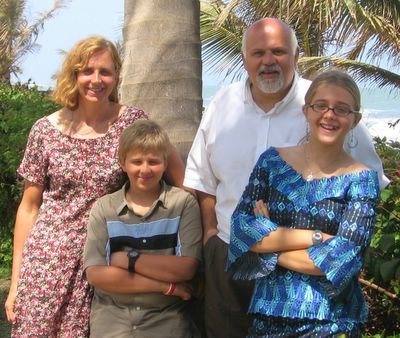
Renita Reed and James Hillary from LEAD at work inside.

See? She had a great time. The participants really wanted to learn.


The class poses Friday afternoon.