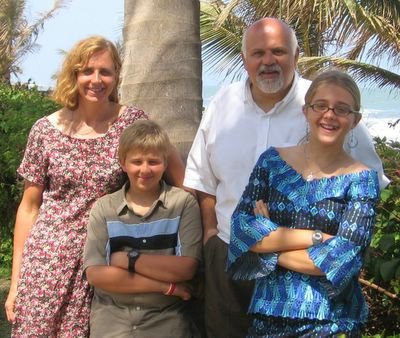
Hi folks, this is Renita Reed online. Bob usually does this blog thing, but for the next couple entries, I thought I’d give you Liberia through my eyes. For several months I’ve been thinking about introducing you to people I serve in my work with LEAD, and today I decided to do it.
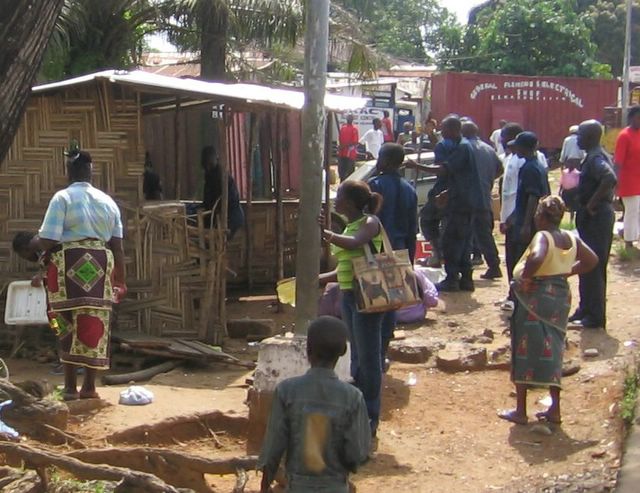
As some of you know, Liberia’ economy was virtually destroyed through twenty years of civil strife, corruption and war. Liberia is recovering, but unemployment is still around 85%, and most Liberians engage in a routine to make enough money for food for just that day. In the interior, away from populated areas, the daily activities are subsistence farming, fishing and hunting. In the cities, thousands set up roadside shops, selling canned goods, used tires, plantains, medicine, soap, soccer balls, fresh and dried fish, rice and beans by the cup, flip-flops, phone cards, and most anything else one might imagine. Children are enlisted by parents to roam their communities selling homemade food items. Bob has told you about little Ishmael and Sam. I'd like to introduce you to two business owners, both of whom are in our current LEAD business class.
Monday, June 05, 2006


 Beatrice
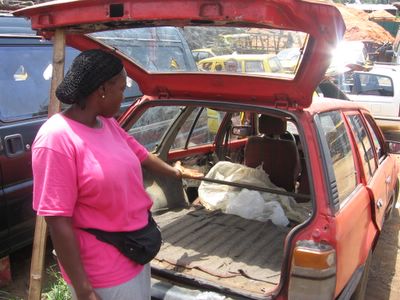
The first is Beatrice, who owns a business called "Mother and Son". She ran a used clothing business which was destroyed in the 2003 war, and has since started a cold water business. Every day, she buys 50 containers of purified cold water, each container holding 30 half liter bags for a total of 1500 bags. These bags are purchased by smaller retailers who run up and down the road calling “co’ wa’ co’ wa' co’ wa’,” to passengers in cars or pedestrians. Each bag sells for 5 Liberian dollars (about 10 US cents). After President Sirleaf’s inauguration, the Liberian Government announced that markets were too close to the streets and had to be moved back at least six feet. Businesses were given three months to do this, although provisions for new market space were not readily provided. Those who did not comply had their structures torn down by the police. Beatrice lost her market space and has now set up an umbrella further back from the road, and further back from her primary client—thirsty taxi drivers. If she does not sell all of her bags of water she no longer has a shack to store her inventory, so she is borrowing space in the trunk of a broken down station wagon next door. Beatrice did not go very far in school and is working hard to learn what she can from LEAD; she is very positive about the future. She hopes to use the money from the loan of LEAD to build a permanent, safer structure for her inventory, as well as invest in additional capital for her business, including a freezer to keep the water cold.
Moses
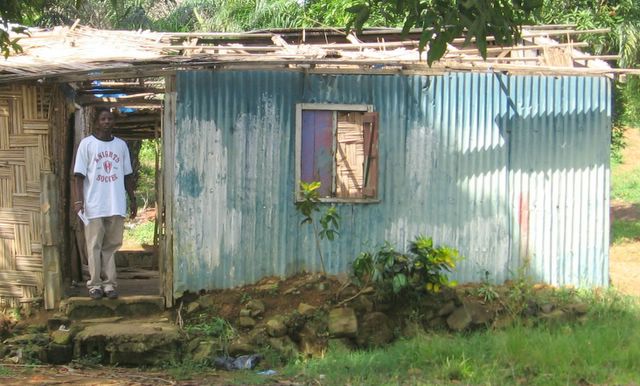
Moses is a member of Providence Baptist Church and owns a charcoal business. The vast majority of Liberians cook with charcoal and so business is always booming. But the work is dirty, extremely labor intensive, and the profit margin is small. Moses goes into the bush to cut down trees, saw limbs, and pile the wood to burn to make his own charcoal, and then transports it back to the city to sell it. Transportation of charcoal is a challenge, as Moses does not own a vehicle and is therefore at the mercy of whatever truck he can hire (another booming but low profit business) to transport the charcoal back to his shack. In addition, his business is situated a mile away from the main road, serving a village away from bigger market areas; Moses has to hire young men with wheelbarrows to carry the bags of charcoal from the truck back to his business. A bigger challenge is keeping the charcoal dry; most of you know how frustrating it is to start wet charcoal, and Moses knows that if he sells wet charcoal, his customers will not come back. Days before we visited his business, a tropical storm came through Liberia and took the roof off of the mat structure where he was storing his charcoal. He now gives up a portion of his very small home to store his charcoal in order to keep it dry. Moses hopes his LEAD loan will help him put corrugated zinc on the roof of his business to keep his charcoal dry, open a second market place, and a future dream is to purchase a vehicle.
Beatrice and Moses are typical of thousands of Liberians attempting to put food on their families’ tables through their micro-businesses. With your help, LEAD is working with Beatrice and Moses to develop and expand their livelihood. Their dream—LEAD’s-- is that as their businesses grow, they will be able to employ other Liberians as well.
Friday, May 26, 2006
Enoch
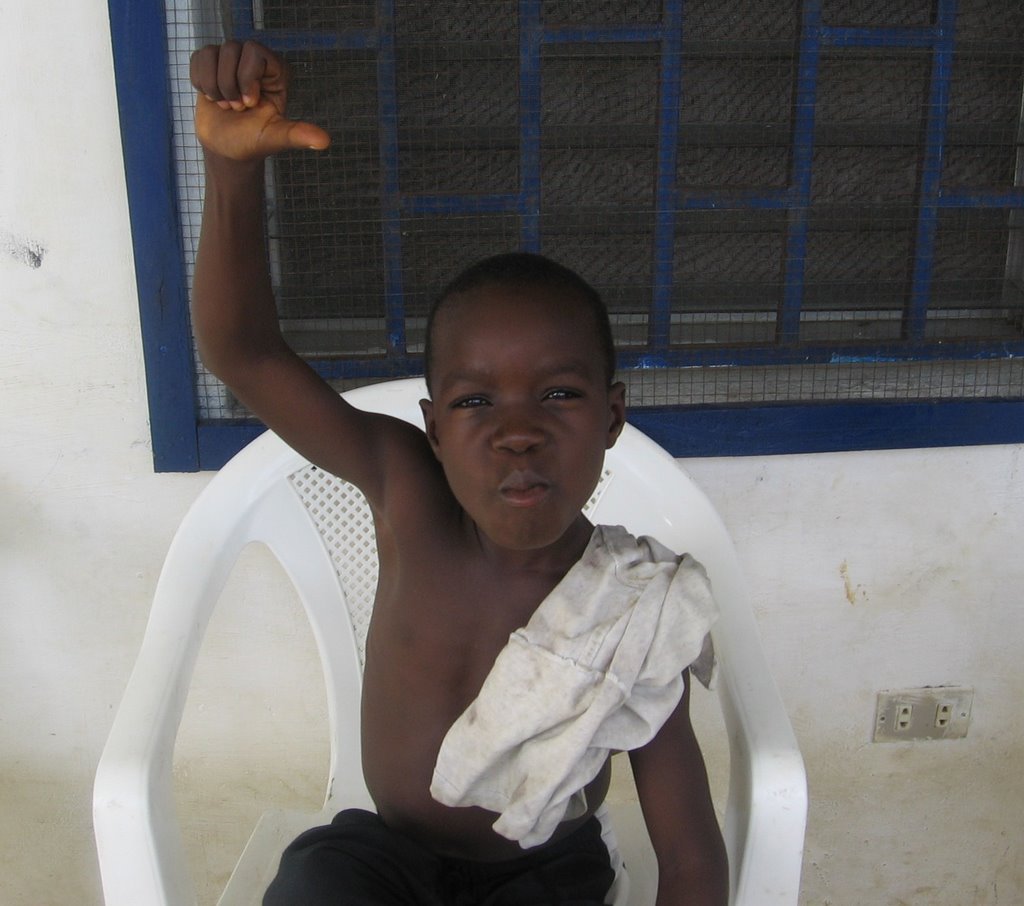
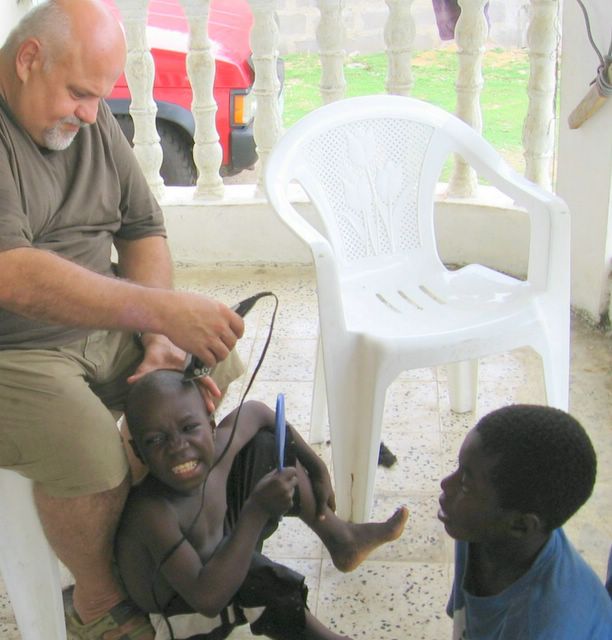
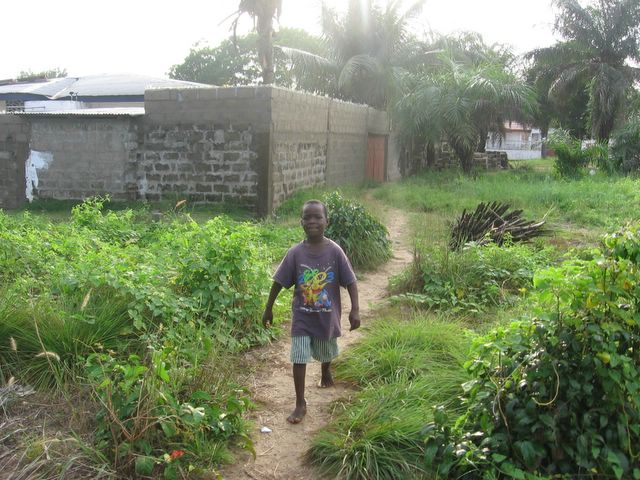
At just under four feet tall, eight year old Enoch is one of the smaller boys in the neighbor- hood. Most kids find him relentlessly annoying and he is forever being pounded by almost everyone around, from girls his size to the teenage boys. He is one of the poorer children in our poor community, often hungry, dressed in grimy torn tee shirts and shorts, with no money to afford flip-flops let alone shoes. Because his feet are bare, his soles are cut and his toes have “jiggers,” (real name chigoes-- not the same as chiggers)) the nasty larvae that we dug out of Renita’s big toe last August. Last month, we extracted three from two toes. Unfortunately, he quickly loses the flip flops we occasionally buy for him.
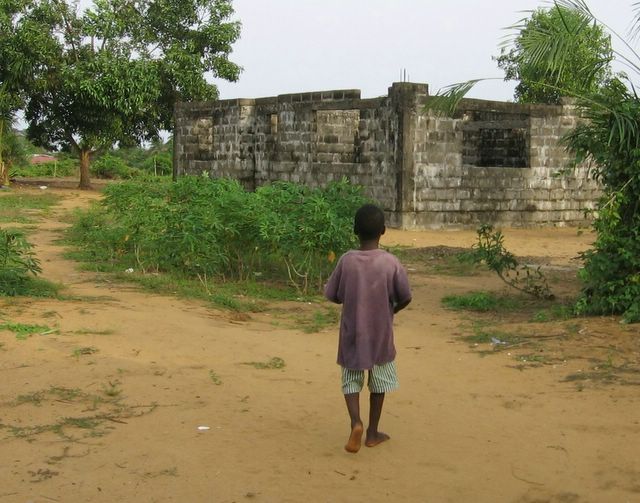
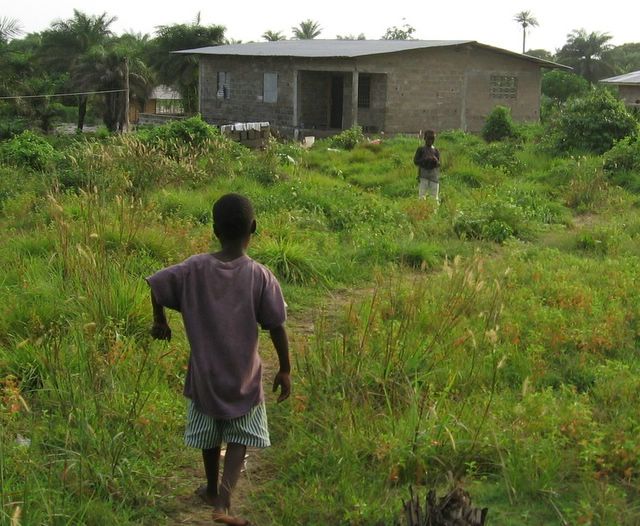
He lives with his mother and grandparents, in an unfinished, open cement block house with no furniture. The family eats sitting on the floor, sleeps on thin foam mats and are always exposed various diseases brought on mosquitoes, flies, rats and the chickens that also make Enoch’s house their coup. Lack of sanitation is a significant problem. There is no well at hand, no bathroom, no soap or toilet tissue. Like millions of others in the world, the family uses various spots around their yard for a toilet. Last October, Enoch cut himself on the leg above the ankle-- a minor cut that would normally be treated with a plastic bandage—but after two days of being exposed to his fingers, the cut was seriously infected and within a week we had to take him to the hospital for antibiotics to stop the ulcerated infection, which was causing his skin to rot and his entire leg to swell. Because the family has no clothes line, the clothes are spread around the yard to dry. This exposes them to the tumbu fly-- which lay eggs in the clothes late in the day. When the eggs hatch, the maggots burrow into the skin from the clothes. Two weeks ago, I popped a tumbu fly maggot from his upper abdomen. We are working with him on basic hygiene skills, and we think he is beginning to get it, but without easy access to soap and clean water, the most we can expect is that he will keep his hands away from his cuts and his face, and try to avoid getting “poopoo” on his fingers.
He does not attend school, because his mother has no money for him to go. Next year, we have arranged for him to go to the local school in partnership with Millbrook Christian School in Michigan.
None of what I have described is unusual for a Liberian boy. I do not write about Enoch to garner sympathy or pity. I write about Enoch because I’m impressed by him. He is one of the most indomitable souls I have ever encountered. Despite the hand he has been dealt, the kid is simply unconquerable. He is assertive, directive, audacious and often hilarious. I said earlier that he gets picked on a lot. This is in part because he never shuts up, and he picks at kids twice his size for whatever attention he can get out of them. His sense of comedic timing is pitch perfect, and he knows exactly when to provide the mouthiest comeback. So when the bigger kids have had enough of his incessant needling, they pummel him. But Enoch will not be broken. The kids can hold him down, make him cry, make him scream and howl, but he bounces back immediately and is right back at them. He spends hours in our yard every day, insisting that I look at something, asking Renita to give him a coloring book, haranguing Noah to come out with his “playtoys,” or telling Hannah that he loves her. He delights and infuriates us every day. He tempts me to yell at him, box his ears in, and he makes me smile and laugh out loud. I wanted you to meet him too.





Subscribe to:
Posts (Atom)