Monday, June 26, 2006


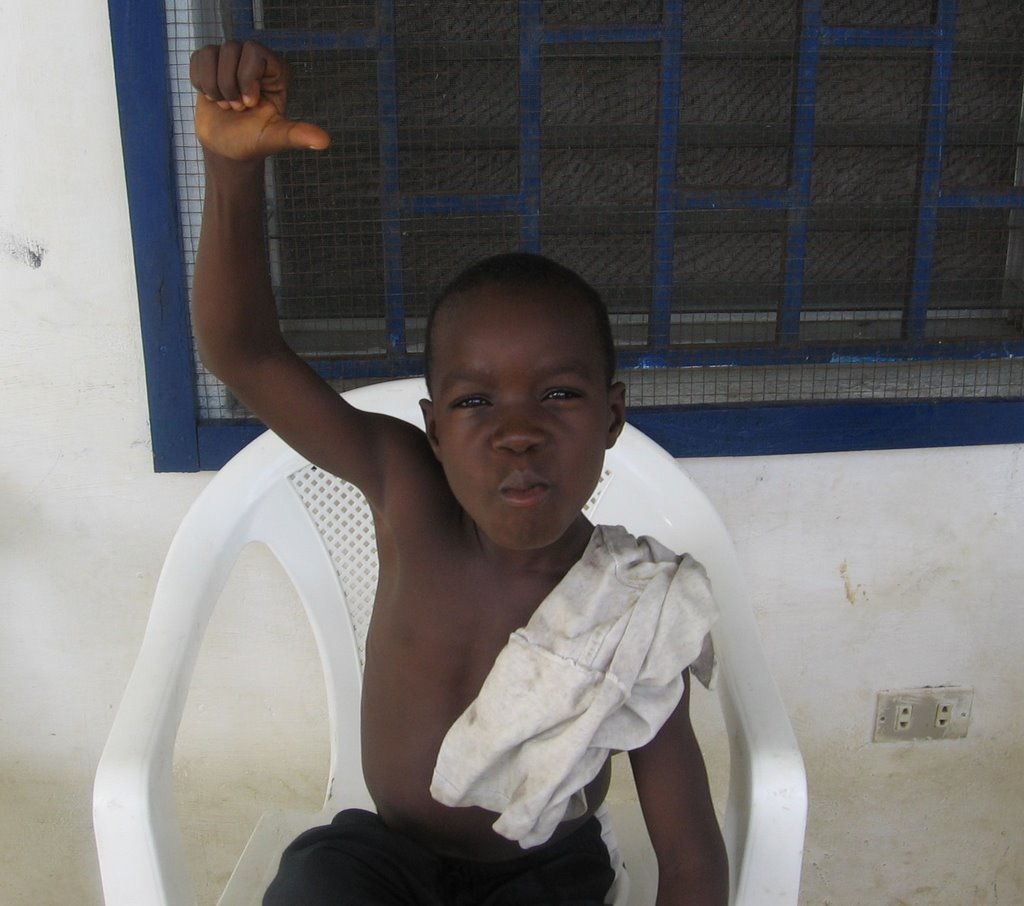
...and a few of his human buddies, Obadiah, Chokon and the ever-present Enoch.

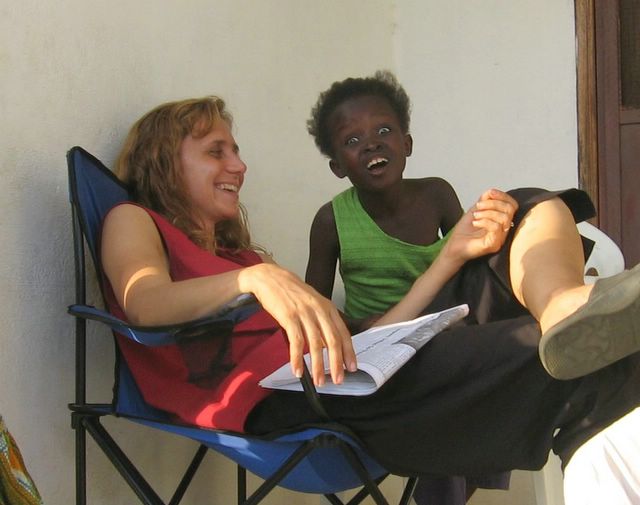
Renita tutoring 17 year old Trokon, as he prepares to go back to school after not being able to for three years...

... and being entertained by Apple.

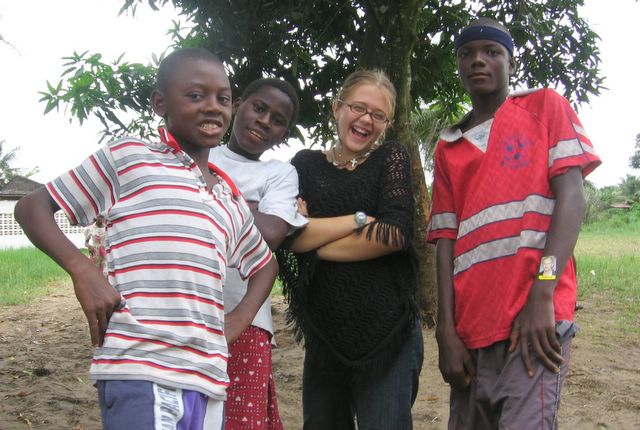
Hannah with two of her girl pals-- Rachel and Odelle.

...and with some boys pals-- here Geeba, Togar and Samson.

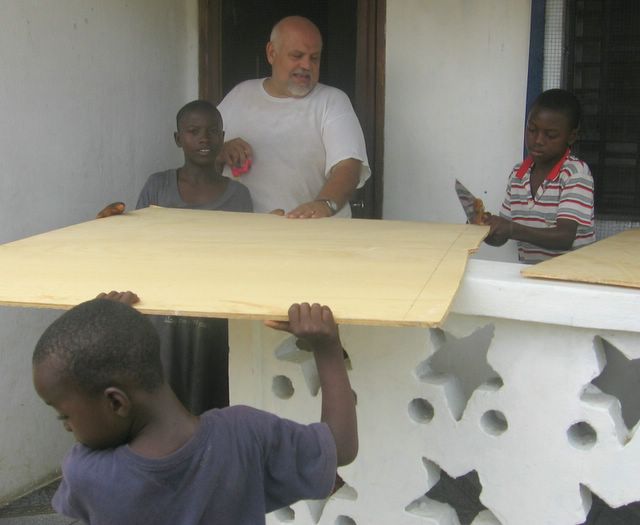
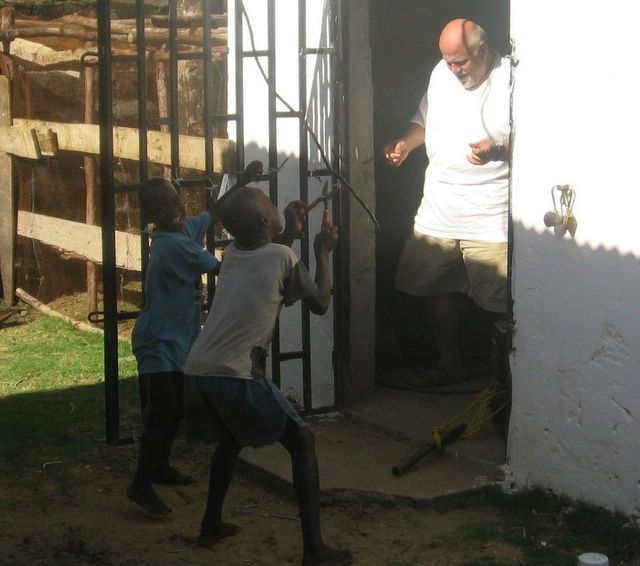
Yers Trooly directing Obadiah, Geeba and Enoch in something he's never done before-- build a dog house.

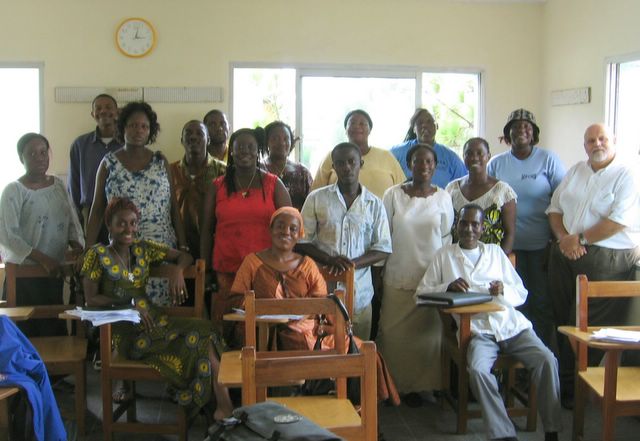
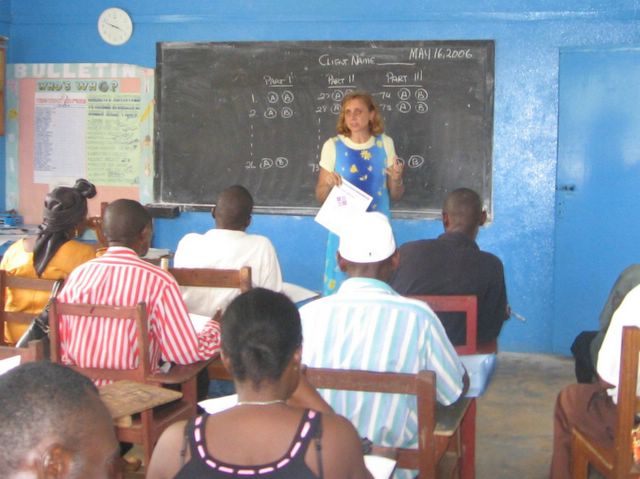
My Conflict, Trauma and Peacebuilding class-- I had a great time teaching these peacemakers.

Monday, June 19, 2006

Getting Busy

We are getting busy. Well, I'm getting busy. Renita was born busy. My class is finishing up this week; I have a final exam to produce. Renita just finished a two day business workshop a few hours away from here. I am still teaching reformed theology for various branches of the "Christian Reformed Church of Liberia." Renita is finishing up this year's home schooling while de facto managing the neighborhood soccer team. She is also halfway through her LEAD business class. I am gearing up for two big events: in July, faculty from Calvin College and Kuyper College in Michigan USA with be visiting MPCHS to figure out how to help us develop a social work program, and in August I am leading a two week, forty hour workshop on counseling and psychosocial skills for reps from about a dozen NGOs around the country. The kids are having a blast. Hannah is out every day chasing and being chased, teasing and being teased, laughing, crying and having the time of her life with the dozens of kids who live here. Noah now has chickens, dogs, pigeons, is hatching lizards and snakes, just released a baby bird he found back into the wild, and is bugging us to get a monkey. Here are a few shots that capture the activity.

The rainy season is upon us. Only half the days are like this at this point. The others are good enough to get out and do stuff...

Practice for the neighborhood soccer team-- they call themselves the "Eleven Dangerous Dwarves." We still don't know why.

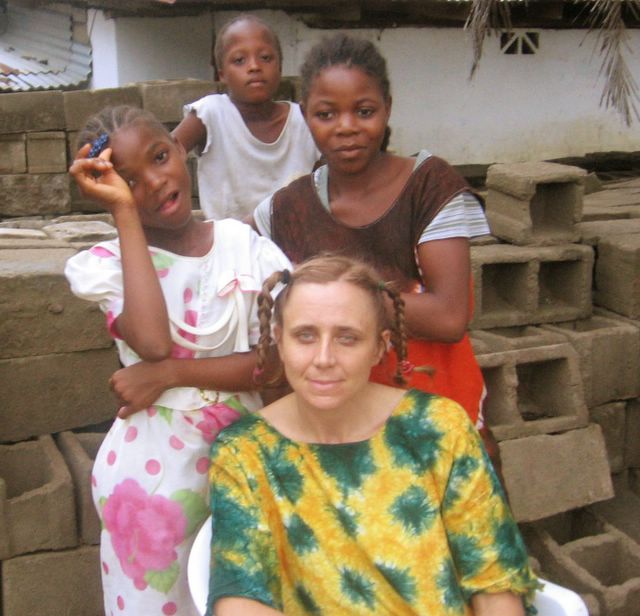
While watching soccer practice, Victoria, Odelle and Rachel decide to plait Renita's hair. As you can see, she loves the attention.

The finished product. A work of art, heady to behold. She loved it so much,it stayed in her hair a full half hour.

The Disco Hil Christian Reformed Church. I was asked to do another one of my workshops on Christian theology. I never dreamed I'd be doing this stuff, but I enjoy hanging out with the Salt.

The Church elders. Rev Zar, denominational head of the CRCL, and a good friend, is second from left.

Inside the church, the workshop participants.

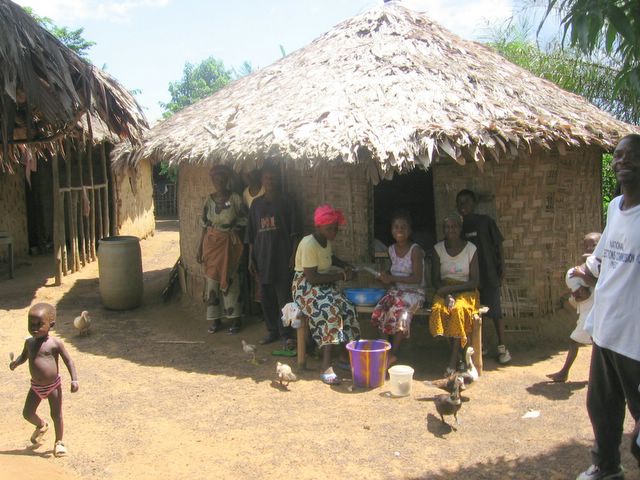
After the workshop, we visted the church parish, a lovely village. Here, some of the ladies prepare cassava.

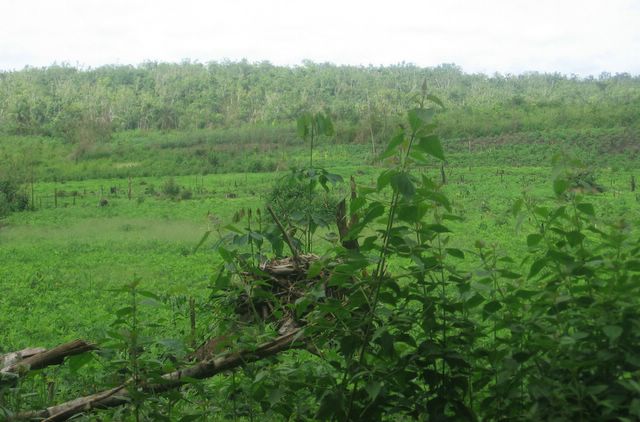
Here are three shots of Renita's trip into the interior, about two hours drive for a two day micro business workshop. The country is hilly and, as you see, very green.

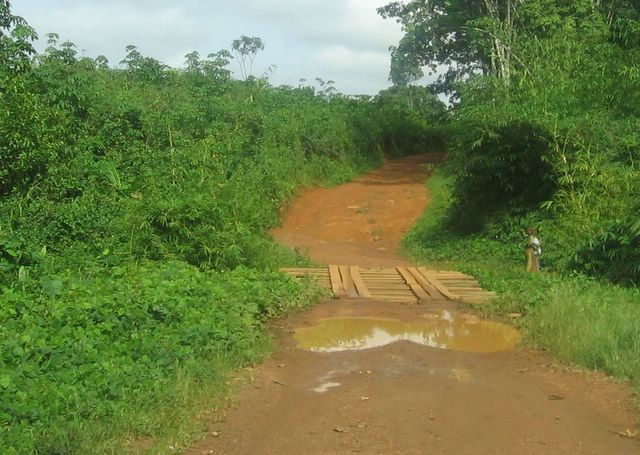
...and here is a shot of the road to the workshop site. Lots of these wooden plank bridges.

This panorama of Renita in action blends three pictures to give you an idea of what the teaching environment in the palaver hut was like. Kinda cool, I think.

One of our neigbors got a monkey, so Noah had to see it. It mostly lays around waiting for its tummy to be rubbed.

Oh, and here is that picture Renita told you about-- Enoch, Chokon and Yers Trooly doin' the "I Love the Generator" dance.

Monday, June 12, 2006

Bob and the Kids

Hi folks. Renita here again. I wanted to share with you some pictures of Bob and the neighborhood kids. However, Blogspot is acting up and we can't seem to get pictures uploaded. So, the images will wait. (You'll love the one of Bob, Enoch and Chokon doing their "I Love the Generator" dance!

Anyway, Bob is really connecting to the kids, and especially the boys. Every day the boys flock to the gate, calling “Unca Ba!”, ‘Unca Ba!’. They love to spend time with him and he seems to delight being with them as well. They work together on various projects around the house or the neighborhood. They laugh and problem solve together, he bandages their wounds, sings and dances with them, works on projects with them and feeds them. In addition, he deals with them directly on character issues, making sure that dishonesty or other unethical behaviors are addressed eye-to-eye, making sure there is a process of asking and receiving forgiveness, talking with them about spiritual matters, encouraging them to listen to the Holy Spirit. It struck me the other day how much Bob is playing the role of a father to many of these young boys – many of them do not have a father in the home. It’s quite touching to overhear them in their various conversations during the course of the day.

Monday, June 05, 2006

Making a Living in Liberia

Hi folks, this is Renita Reed online. Bob usually does this blog thing, but for the next couple entries, I thought I’d give you Liberia through my eyes. For several months I’ve been thinking about introducing you to people I serve in my work with LEAD, and today I decided to do it.

As some of you know, Liberia’ economy was virtually destroyed through twenty years of civil strife, corruption and war. Liberia is recovering, but unemployment is still around 85%, and most Liberians engage in a routine to make enough money for food for just that day. In the interior, away from populated areas, the daily activities are subsistence farming, fishing and hunting. In the cities, thousands set up roadside shops, selling canned goods, used tires, plantains, medicine, soap, soccer balls, fresh and dried fish, rice and beans by the cup, flip-flops, phone cards, and most anything else one might imagine. Children are enlisted by parents to roam their communities selling homemade food items. Bob has told you about little Ishmael and Sam. I'd like to introduce you to two business owners, both of whom are in our current LEAD business class.
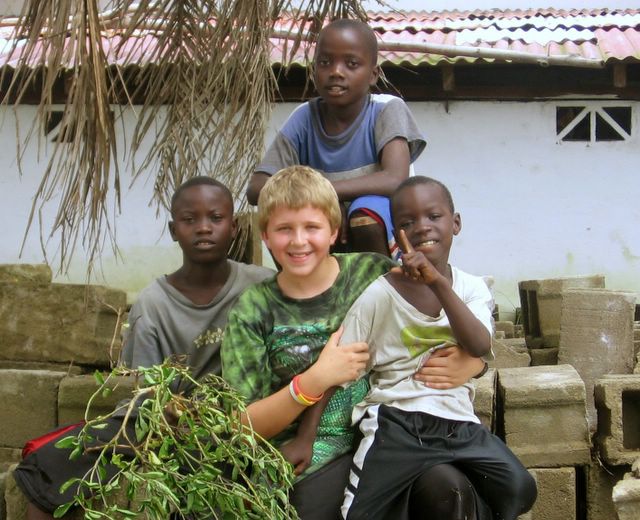
Beatrice

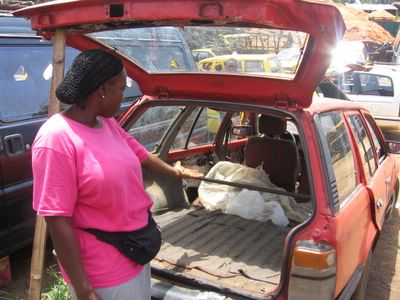
The first is Beatrice, who owns a business called "Mother and Son". She ran a used clothing business which was destroyed in the 2003 war, and has since started a cold water business. Every day, she buys 50 containers of purified cold water, each container holding 30 half liter bags for a total of 1500 bags. These bags are purchased by smaller retailers who run up and down the road calling “co’ wa’ co’ wa' co’ wa’,” to passengers in cars or pedestrians. Each bag sells for 5 Liberian dollars (about 10 US cents). After President Sirleaf’s inauguration, the Liberian Government announced that markets were too close to the streets and had to be moved back at least six feet. Businesses were given three months to do this, although provisions for new market space were not readily provided. Those who did not comply had their structures torn down by the police. Beatrice lost her market space and has now set up an umbrella further back from the road, and further back from her primary client—thirsty taxi drivers. If she does not sell all of her bags of water she no longer has a shack to store her inventory, so she is borrowing space in the trunk of a broken down station wagon next door. Beatrice did not go very far in school and is working hard to learn what she can from LEAD; she is very positive about the future. She hopes to use the money from the loan of LEAD to build a permanent, safer structure for her inventory, as well as invest in additional capital for her business, including a freezer to keep the water cold.
Beatrice's current storage area.
Moses

Moses is a member of Providence Baptist Church and owns a charcoal business. The vast majority of Liberians cook with charcoal and so business is always booming. But the work is dirty, extremely labor intensive, and the profit margin is small. Moses goes into the bush to cut down trees, saw limbs, and pile the wood to burn to make his own charcoal, and then transports it back to the city to sell it. Transportation of charcoal is a challenge, as Moses does not own a vehicle and is therefore at the mercy of whatever truck he can hire (another booming but low profit business) to transport the charcoal back to his shack. In addition, his business is situated a mile away from the main road, serving a village away from bigger market areas; Moses has to hire young men with wheelbarrows to carry the bags of charcoal from the truck back to his business. A bigger challenge is keeping the charcoal dry; most of you know how frustrating it is to start wet charcoal, and Moses knows that if he sells wet charcoal, his customers will not come back. Days before we visited his business, a tropical storm came through Liberia and took the roof off of the mat structure where he was storing his charcoal. He now gives up a portion of his very small home to store his charcoal in order to keep it dry. Moses hopes his LEAD loan will help him put corrugated zinc on the roof of his business to keep his charcoal dry, open a second market place, and a future dream is to purchase a vehicle.

Beatrice and Moses are typical of thousands of Liberians attempting to put food on their families’ tables through their micro-businesses. With your help, LEAD is working with Beatrice and Moses to develop and expand their livelihood. Their dream—LEAD’s-- is that as their businesses grow, they will be able to employ other Liberians as well.
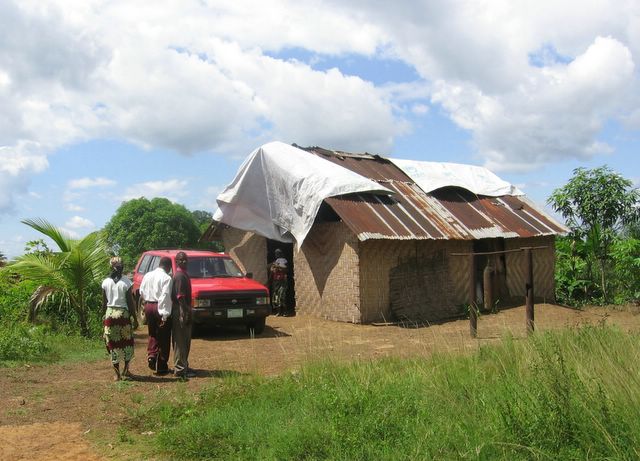
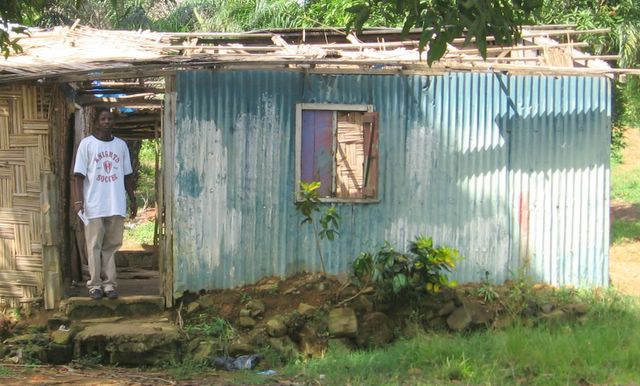
Moses' storage building-- roof torn off by one of Liberia's severe storms.

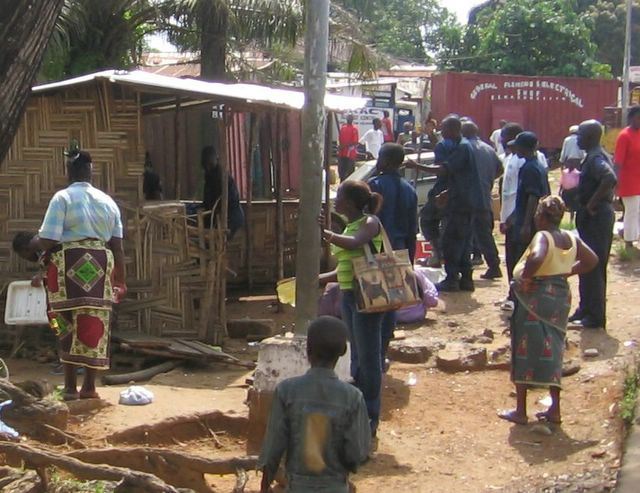
Here is a picture I happened to get in April-- Police tearing down a business shack too close to the road. The owner wept as the police moved in without a word and broke it down.
Friday, May 26, 2006

Enoch


At just under four feet tall, eight year old Enoch is one of the smaller boys in the neighbor- hood. Most kids find him relentlessly annoying and he is forever being pounded by almost everyone around, from girls his size to the teenage boys. He is one of the poorer children in our poor community, often hungry, dressed in grimy torn tee shirts and shorts, with no money to afford flip-flops let alone shoes. Because his feet are bare, his soles are cut and his toes have “jiggers,” (real name chigoes-- not the same as chiggers)) the nasty larvae that we dug out of Renita’s big toe last August. Last month, we extracted three from two toes. Unfortunately, he quickly loses the flip flops we occasionally buy for him.

He lives with his mother and grandparents, in an unfinished, open cement block house with no furniture. The family eats sitting on the floor, sleeps on thin foam mats and are always exposed various diseases brought on mosquitoes, flies, rats and the chickens that also make Enoch’s house their coup. Lack of sanitation is a significant problem. There is no well at hand, no bathroom, no soap or toilet tissue. Like millions of others in the world, the family uses various spots around their yard for a toilet. Last October, Enoch cut himself on the leg above the ankle-- a minor cut that would normally be treated with a plastic bandage—but after two days of being exposed to his fingers, the cut was seriously infected and within a week we had to take him to the hospital for antibiotics to stop the ulcerated infection, which was causing his skin to rot and his entire leg to swell. Because the family has no clothes line, the clothes are spread around the yard to dry. This exposes them to the tumbu fly-- which lay eggs in the clothes late in the day. When the eggs hatch, the maggots burrow into the skin from the clothes. Two weeks ago, I popped a tumbu fly maggot from his upper abdomen. We are working with him on basic hygiene skills, and we think he is beginning to get it, but without easy access to soap and clean water, the most we can expect is that he will keep his hands away from his cuts and his face, and try to avoid getting “poopoo” on his fingers.

He does not attend school, because his mother has no money for him to go. Next year, we have arranged for him to go to the local school in partnership with Millbrook Christian School in Michigan.

None of what I have described is unusual for a Liberian boy. I do not write about Enoch to garner sympathy or pity. I write about Enoch because I’m impressed by him. He is one of the most indomitable souls I have ever encountered. Despite the hand he has been dealt, the kid is simply unconquerable. He is assertive, directive, audacious and often hilarious. I said earlier that he gets picked on a lot. This is in part because he never shuts up, and he picks at kids twice his size for whatever attention he can get out of them. His sense of comedic timing is pitch perfect, and he knows exactly when to provide the mouthiest comeback. So when the bigger kids have had enough of his incessant needling, they pummel him. But Enoch will not be broken. The kids can hold him down, make him cry, make him scream and howl, but he bounces back immediately and is right back at them. He spends hours in our yard every day, insisting that I look at something, asking Renita to give him a coloring book, haranguing Noah to come out with his “playtoys,” or telling Hannah that he loves her. He delights and infuriates us every day. He tempts me to yell at him, box his ears in, and he makes me smile and laugh out loud. I wanted you to meet him too.

Enoch's day typically begins with a trip to the Reed house.

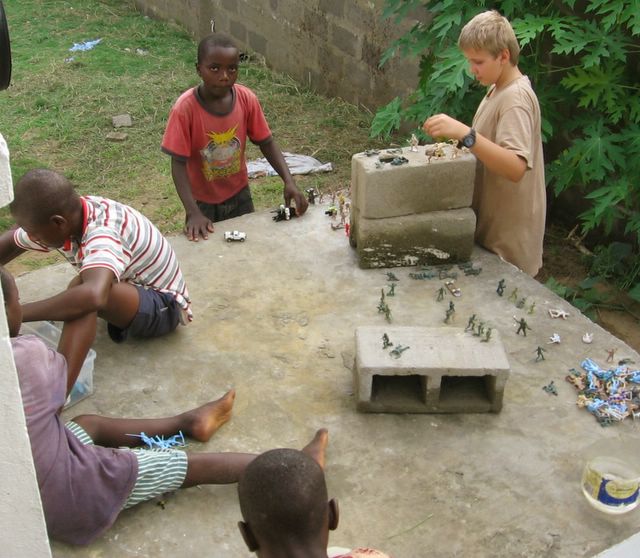
When he gets to our house, he (purple shirt)joins Noah, Chokon, Geeba and Obadiah for a serious playtoy session.

He loves the plastic soldiers and cowboys.

Everyday, Enoch's mouth get him into trouble. Here, brothers Eastman, Jackson and Chokon give him what for after being "cursed" by the lad. (Yes, I intervened after taking this. Enoch was mouthing off again seconds later. )

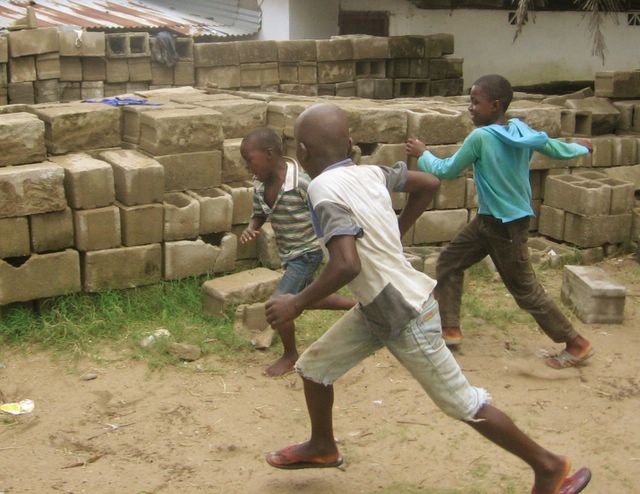
On another day, Jackson and Chokon attempt to run him down...

...but Noah was there to chase the attackers off. Note Enoch, literally bouncing back for whoever is next.

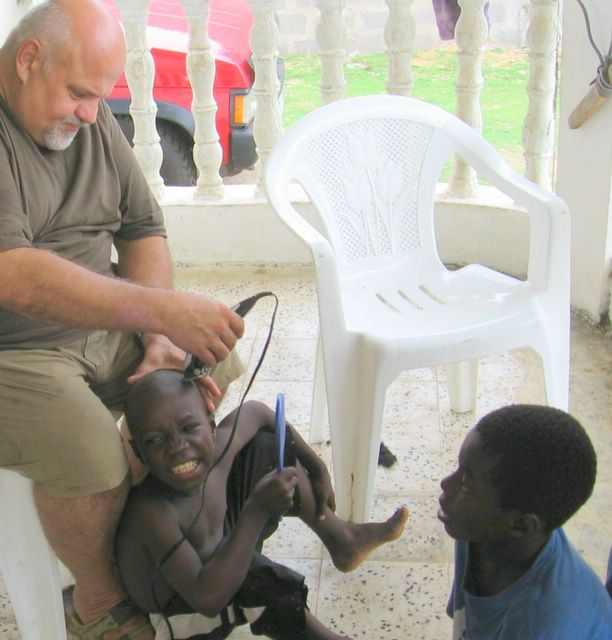
On one of his visits, be begged Yers Trooly to cut his hair. As you can see, he really enjoys this. As do I.

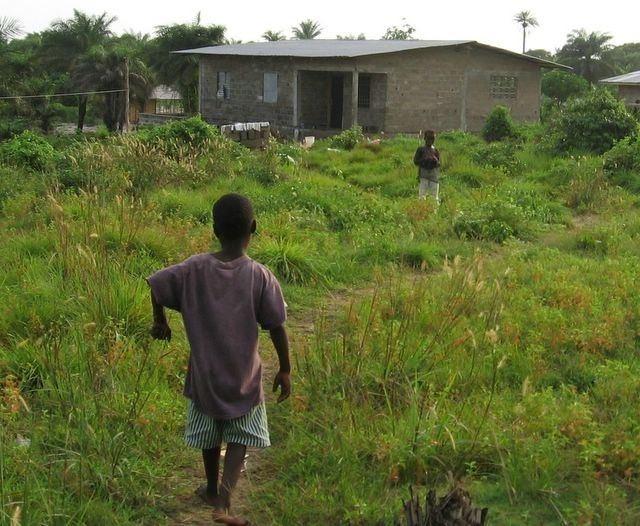
Another day of tormenting and being tormented behind him, a satisfied Enoch heads for home.

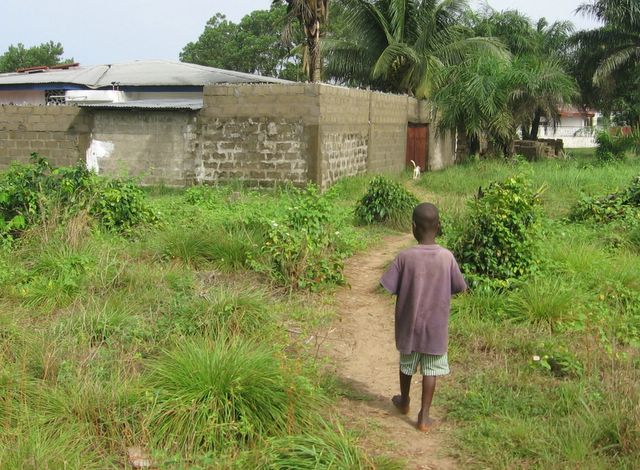
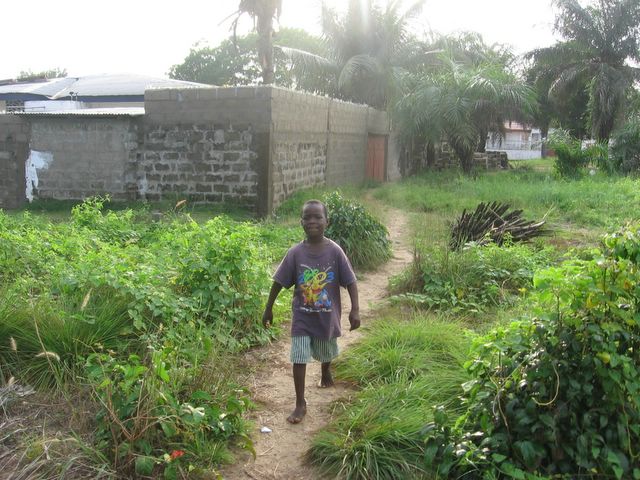
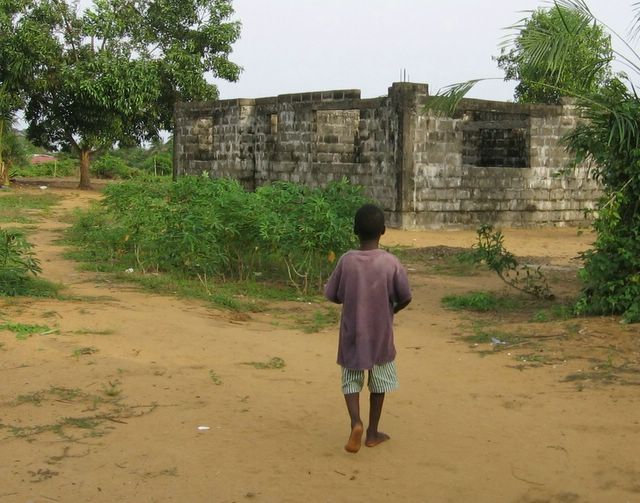
On his way, he passes several cement shells that used to be homes. Now abandoned, gutted and rotting, they testify to fifteen years of instability, displacement and war.

At his Grandfather's house, a small cement block structure, the next step up from dirt floors, reed mat walls and a tarp roof. This kind of house transformation is happening all over Liberia.

Enoch at his back porch with pals. Actually this is where Grandmother does the cooking for the family. Note the two small coalpots to the left of the kids.

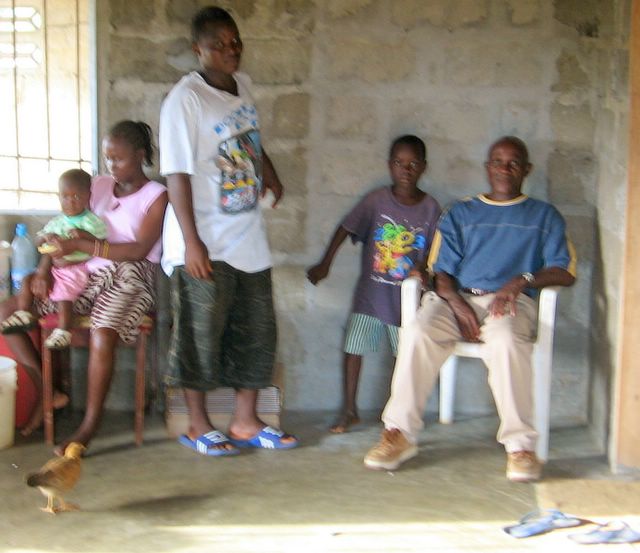
The family living room. Here is his little sister, mother, father (he lives in another county and rarely visits.) and grandfather.

Enoch's bedroom. He sleep's here with his little sister and 15 year old aunt-- who by the way also plays in our yard and has the best throwing arm of anyone I know.

From an unfinshed portion of his grandafather's house-- a front yard overlooking the marsh and the neighbors with the Altantic 200 yards beyond. "Welcome to my world."

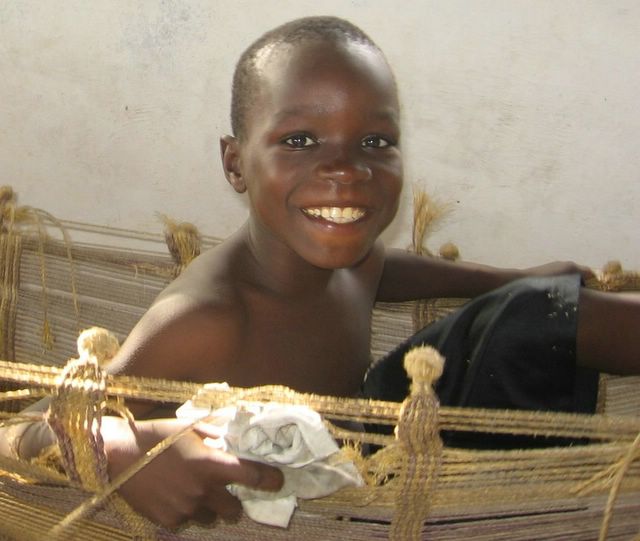
A farewell smile from a hammock across the waves.

Wednesday, May 17, 2006

A Teaching Dynamo

Renita is a remarkable servant leader, as anyone who knows her quickly testifies. Back in Grand Rapids, she supervised neighborhood homework groups in our home, was a powerful advocate for community schools, and was always off lending her wisdom at workshops and seminars. Nothing has changed with her move across the Atlantic.

Every Tuesday, From 2pm to 5pm she teaches the LEAD class. This is at Christine Norman's school. Christine is the late president Tolbert's daughter, and a friend of many back in Grand Rapids.

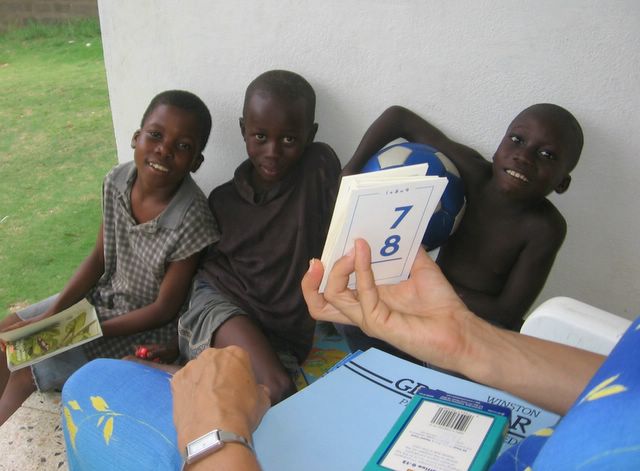
When she gets home, the kids are waiting. Here she uses math flash cards with Ishmael and Sam from the orphanage, and Eastman.

Drawing class-- some of these kids do not know their colors. In addition to Noah,I think we have Obadiah, Eastman, Enoch, Chokon and Ishmael.

On to Reading with Odelle learning Phonics and Leonard trying to figure it out.

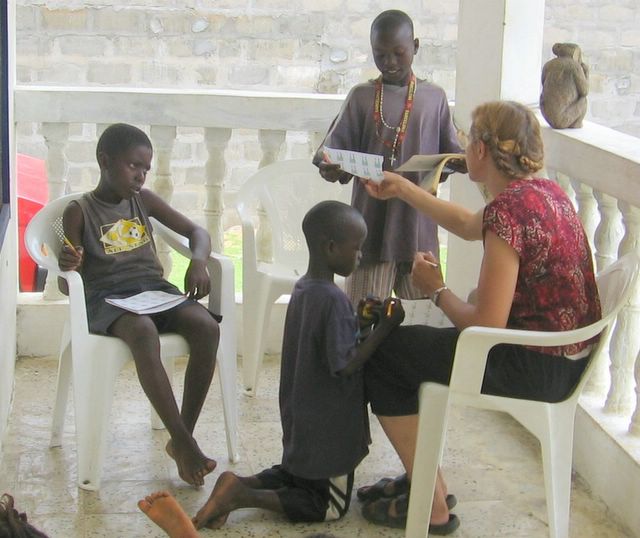
From left, Jackson, Enoch and Obadiah taking a quiz on subtraction. They actually ask Renita to give these to her. For Enoch, this is the only schooling he gets.

Last but not least, let us not forget her pet students, Hannah and Noah, who she home schools Monday thru Friday, 8am to 1pm. Talk about productivity!

Tuesday, May 16, 2006

Chicken News

Noah has been bugging us ever since we got here to get chickens, so a couple weeks ago we relented. However the dogs have been chasing them all over and out of the yard, giving us quite the headache. We almost told Noah we were going to get rid of the birds. We told him we would work with the dogs to train them not to chase the chickens. In the meantime, one of our neighbor kids, a twelve year old named Geeba-- Renita's father got close to him when he visited-- offered to supervise the building of a chicken fence and coup.

The good news is we are finally at a point where the dogs and chickens are actually free in the yard together without the dogs attacking, but the birds have a place to roost and get out of the rain at night. Can eggs be far behind?

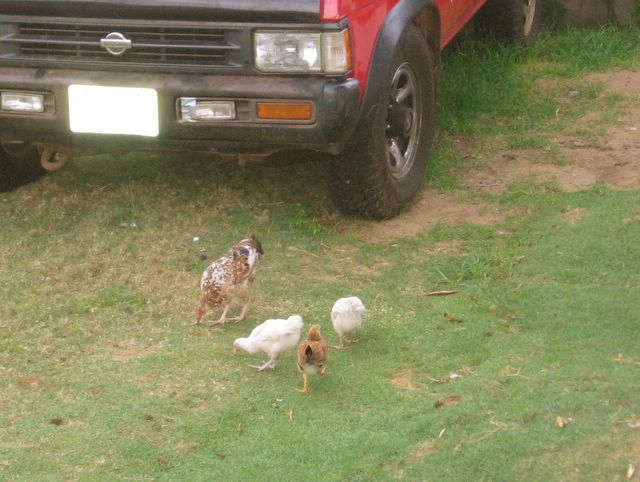
Here the chickens are, trying to enjoy life in our yard.

But our vicious Kung-Foo dogs (Pinky pictured here attempting to do a Bruce Lee on Noah) would not let them rest-- chased the poor cluckers whenever they were not tied up.

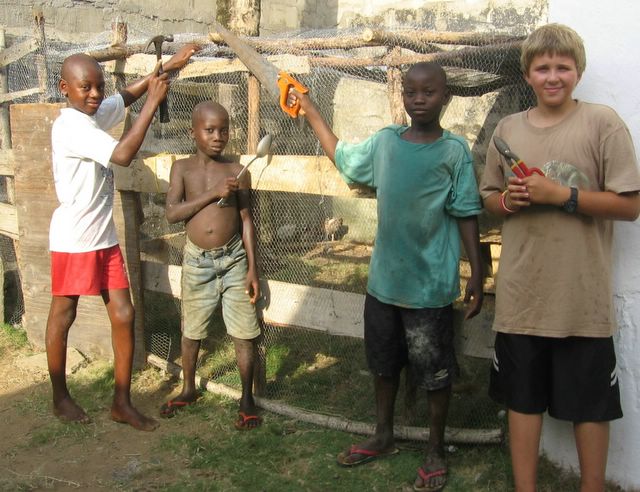
Geeba (left) lent his building expertise, and along with Eastman, Obadiah and Noah, built a coup out back by the generator shed.

So now Noah's birds, Bawk, Cluck, Richie and lil' Richie, are all safe and sound.

Thursday, May 11, 2006

The Thing about Humidity

As most of you know the coast of Liberia is one of the wettest places on Earth. During the wet season-- which has just begun-- it rains for days at a time without letup, and most of the year’s 200 plus inches of rain falls during the next four months. Coming from a moist Midwestern US area that sees 40 inches in a year, it’s an impressive display. But far more impressive than the rain is Liberia’s humidity, which is as high as it gets anywhere, just about 365 days of the year. For humans, and especially me, he thing about humidity is what is does to the body’s natural ability to cool itself. When we are hot, we sweat. Sweat has no cooling powers in itself. However it is designed to evaporate, and as it evaporates, the body cools. In dry climates, like Senegal closer to the Sahara, it is just as hot as in Liberia and often hotter. A person perspires there as much as here, but clothes are never wet and rarely does sweat collect on the brow. A person may not even realize he is sweating. The ultra dry air immediately takes it, resulting in a cooler body.

In Liberia, the air is so saturated with moisture that perspiration simply has no where to go—the body just gets wetter and wetter in a vain attempt to cool off. I go through about five shirts a day here if I’m not in the blessed air conditioning of car or work. At home, ten minutes of activity, like pounding a few nails or taking the generator out, immediately starts a process that drenches my shirt by the time I’m finished. Sweat, with no chance of evaporation, drips off my body or is continually being wrung out of the handkerchiefs I now carry everywhere. And my body just gets hotter.

It really is fascinating. I used to think the humidity caused me to sweat more, but this is not the case. The amazing humidity of Liberia simply cannot evaporate it, so it accumulates. I’ve never understood the mechanism of evaporative cooling until now, when it does not work.